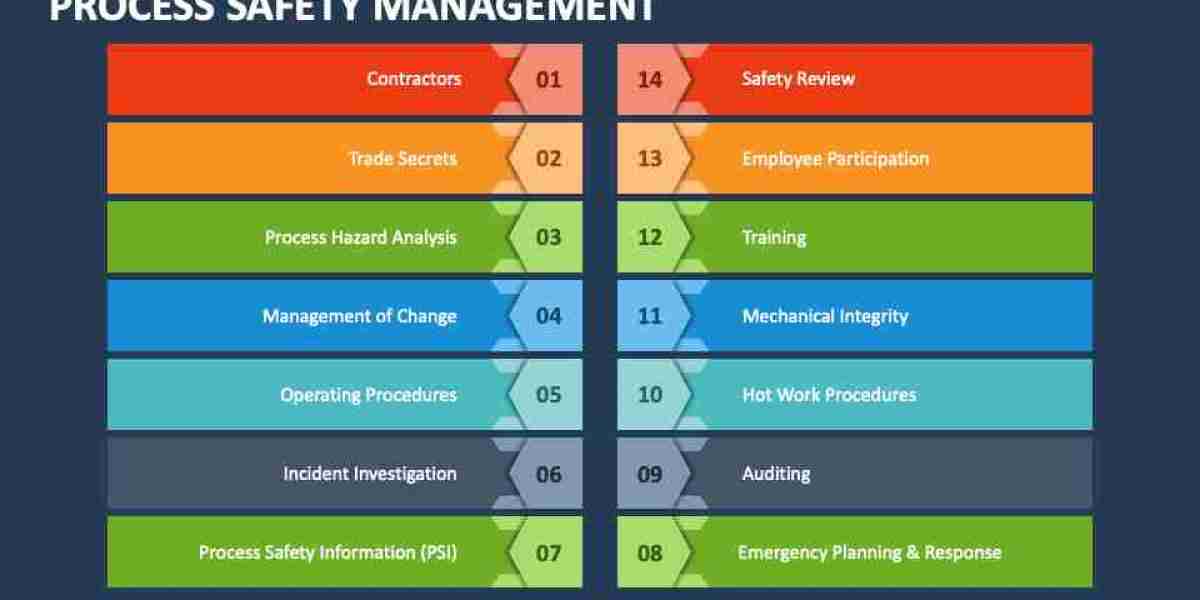
The process safety services market has shown significant promise over recent years, driven by growing industrial hazards, strict regulatory frameworks, and the increasing need for risk management across industries. However, despite its upward trajectory, several inhibitors continue to challenge its full potential. These obstacles range from internal organizational limitations to broader market and regulatory inconsistencies, slowing down adoption and affecting growth in both developed and emerging economies.
High Implementation Costs and Budget Constraints
One of the primary inhibitors in the process safety services market is the high cost associated with implementing comprehensive safety systems. Risk assessments, HAZOP studies, and safety audits require not only specialized equipment but also the involvement of expert consultants and engineers. Many small to mid-sized companies, particularly in developing countries, find it difficult to allocate sufficient budget for these services.
The cost becomes even more prohibitive when organizations attempt to integrate digital technologies such as AI-based risk prediction tools, real-time monitoring systems, and IoT-enabled safety mechanisms. For companies operating on tight margins, these safety investments are often deprioritized in favor of short-term operational goals, despite the long-term benefits.
Shortage of Skilled Safety Professionals
Another critical inhibitor is the lack of qualified and trained process safety professionals. This shortage is especially apparent in regions undergoing rapid industrialization, where demand for process safety services often outpaces the availability of skilled labor. Professionals with expertise in advanced risk assessment methodologies, regulatory compliance, and safety software tools are in limited supply.
As a result, many organizations are unable to fully implement or sustain process safety programs. Training internal teams is a potential solution, but this too requires time and investment, further delaying adoption.
Technological Complexity and Integration Challenges
While digital transformation presents great opportunities, it also introduces integration challenges that act as market inhibitors. Legacy systems in older industrial facilities are often incompatible with modern safety software and hardware. Replacing these systems or upgrading infrastructure can be technically difficult, costly, and disruptive to ongoing operations.
In many cases, companies face difficulty in aligning operational technology (OT) with information technology (IT) to create a unified safety ecosystem. This lack of interoperability between platforms creates silos, reducing the effectiveness of safety monitoring and response. Moreover, the absence of standardized safety software solutions makes integration even more complex, especially in multinational organizations with diverse operational setups.
Inconsistent Regulations Across Regions
The lack of harmonized global safety regulations is another significant inhibitor in the process safety services market. While some countries have rigorous safety laws and enforcement mechanisms, others either lack comprehensive standards or fail to implement them effectively. This disparity causes confusion for multinational companies and discourages consistent investment in safety services.
Moreover, evolving regulations that differ from one jurisdiction to another create compliance complexities. Companies must adapt to multiple regulatory frameworks, which can lead to inconsistent safety practices across facilities and increase the administrative burden. The lack of a universal safety standard slows down widespread adoption of process safety services globally.
Resistance to Change and Organizational Culture
In many organizations, especially those with a long-standing operational history, there exists a resistance to change that hampers the implementation of new safety strategies. Safety is often viewed as a cost center rather than a value-adding function. This mindset limits the willingness of leadership to invest in advanced safety services and inhibits cultural transformation.
Establishing a proactive safety culture requires not only changes in policy but also commitment from all levels of the organization. Where such buy-in is missing, safety strategies remain superficial, reducing their overall impact. This cultural inertia is one of the hardest challenges to overcome and significantly affects the success of process safety service adoption.
Data Privacy and Cybersecurity Concerns
With the increasing use of cloud-based platforms and digital tools for safety management, cybersecurity has become a major concern. Companies are often hesitant to integrate their operational safety data with external systems due to fears of data breaches, cyberattacks, and loss of sensitive information.
These concerns are especially relevant in critical infrastructure sectors like oil & gas and power generation, where even minor cybersecurity incidents can lead to severe operational disruptions. As a result, some organizations delay or avoid implementing digital safety systems, preferring manual or semi-automated alternatives despite their inefficiencies.
Conclusion
While the demand for safety and risk management continues to rise, the process safety services market inhibitors pose substantial challenges to full-scale adoption. From high costs and skill shortages to integration barriers and regulatory fragmentation, these factors collectively slow the industry’s momentum. Overcoming these inhibitors will require coordinated efforts among stakeholders, including governments, service providers, and industrial leaders. By addressing these challenges with strategic investments, workforce development, and a stronger commitment to safety culture, the market can move beyond its limitations and unlock its full growth potential.