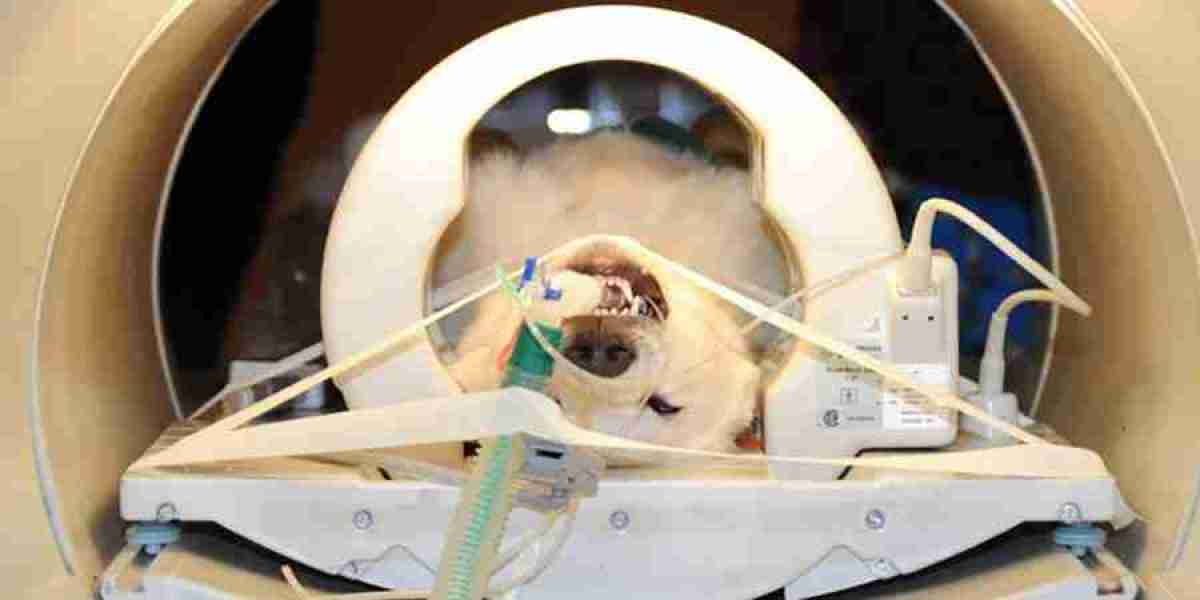
The veterinary MRI systems market is rapidly evolving, driven by technological advancements, increasing demand for advanced diagnostic tools in veterinary care, and rising awareness of animal health. Magnetic Resonance Imaging (MRI) has emerged as a vital tool in veterinary medicine, providing detailed images of soft tissues, which aids in accurate diagnosis and treatment of various animal diseases.
Market Growth Drivers
One of the primary factors driving the growth of the veterinary MRI systems market is the increasing prevalence of chronic and complex animal diseases. Pet owners and animal caregivers are increasingly seeking advanced diagnostic procedures to ensure early and precise treatment. MRI, being non-invasive and highly effective in imaging soft tissue structures such as the brain, spinal cord, joints, and muscles, offers a significant advantage over traditional diagnostic tools like X-rays or ultrasound.
Additionally, the rise in pet ownership globally has fueled demand for improved veterinary healthcare services. This trend is especially prominent in developed regions such as North America and Europe, where pets are often considered family members, leading to higher spending on their health and wellbeing. Veterinary clinics and hospitals are thus investing in cutting-edge diagnostic technologies, including MRI systems, to offer comprehensive care.
Technological Advancements
Technological innovation plays a crucial role in shaping the veterinary MRI systems market dynamics. Manufacturers are developing compact and affordable MRI machines specifically tailored for veterinary use. Unlike human MRI systems, veterinary MRI machines often need to accommodate different sizes of animals, from small pets like cats and dogs to larger animals such as horses.
Moreover, advancements in software and imaging techniques have improved the speed, resolution, and accuracy of MRI scans, making them more accessible and practical for veterinary applications. The integration of AI and machine learning algorithms into MRI technology is expected to enhance diagnostic capabilities further by aiding in image interpretation and reducing scan times.
Challenges and Market Restraints
Despite the promising growth, the veterinary MRI systems market faces some challenges. The high cost of MRI machines and the associated operational expenses can be prohibitive, especially for smaller veterinary clinics and hospitals. Maintenance costs and the need for specialized training for veterinarians to operate MRI equipment also limit widespread adoption.
Another restraint is the relatively limited awareness of MRI technology’s benefits in veterinary care among animal owners in emerging markets. This restricts demand and slows market penetration in regions where veterinary infrastructure is still developing.
Opportunities in Emerging Markets
Emerging markets such as Asia-Pacific and Latin America present substantial growth opportunities for the veterinary MRI systems market. Increasing disposable incomes, improving veterinary infrastructure, and growing pet adoption rates in these regions are contributing to rising demand for advanced veterinary diagnostics.
Governments and private organizations are investing in veterinary healthcare, driving improvements in diagnostic capabilities and infrastructure. Moreover, collaborations between MRI system manufacturers and veterinary institutions for training and research are likely to boost market growth.
Market Segmentation
The veterinary MRI systems market is segmented based on product type, application, and end-user. By product type, the market includes low-field and high-field MRI systems. Low-field MRI systems are more affordable and compact, making them popular among small animal clinics, while high-field systems offer superior image quality and are preferred by specialized veterinary hospitals.
Applications span from neurological and musculoskeletal imaging to oncology and cardiology. Neurological disorders in pets, such as brain tumors and spinal injuries, represent a significant portion of MRI applications, driving demand for veterinary MRI systems.
End-users mainly include veterinary clinics, hospitals, and research institutions. Larger veterinary hospitals are early adopters due to their ability to invest in expensive technology and higher patient volumes.
Competitive Landscape
The veterinary MRI systems market is moderately consolidated with a few key players dominating the space. These companies are focusing on product innovation, strategic partnerships, and expanding their distribution networks to capture a larger market share. Additionally, manufacturers are customizing MRI solutions to meet specific veterinary needs, such as portable MRI machines for field use with large animals like horses.
Future Outlook
The outlook for the veterinary MRI systems market is positive, with continuous technological advancements and growing demand for high-quality veterinary care expected to propel growth. The incorporation of AI and telemedicine, coupled with efforts to reduce costs and improve accessibility, will likely drive wider adoption of MRI systems in veterinary medicine globally.
As awareness increases and veterinary healthcare infrastructure improves in developing regions, the veterinary MRI systems market is poised for significant expansion over the next decade.