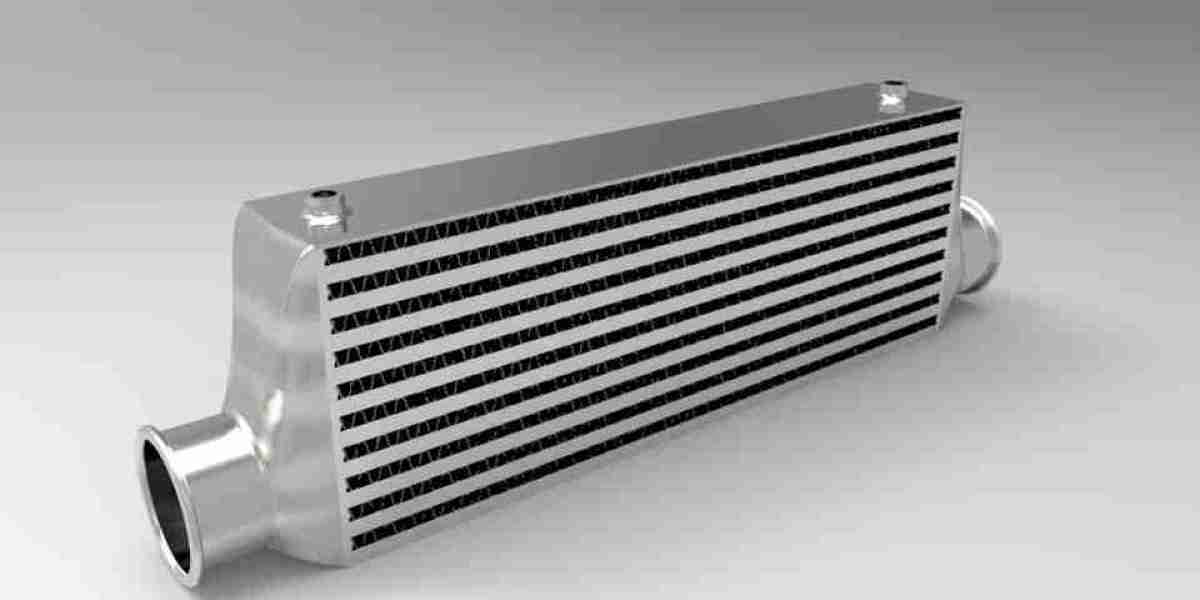
The automotive intercooler market is being propelled by several key accelerators that are rapidly enhancing the sector’s growth potential across global regions. As the automotive industry transitions towards cleaner, more efficient, and performance-driven vehicle technologies, intercoolers have emerged as essential components that support turbocharged engines, emissions reduction, and fuel economy optimization. These accelerators are laying a solid foundation for sustained demand and innovation in the market.
One of the strongest accelerators for the automotive intercooler market is the global push for reduced vehicle emissions. Governments across the world are enforcing stricter emission standards, compelling automakers to downsize engines and incorporate forced induction systems like turbochargers. Turbocharging increases engine power without increasing engine displacement, but it also generates significant heat. Intercoolers are therefore critical in cooling the compressed air before it enters the engine, ensuring optimal combustion efficiency and reducing the formation of harmful nitrogen oxides (NOx). The demand for efficient intercoolers is directly tied to these emissions reduction efforts, making regulations a driving force for market expansion.
Another major accelerator is the growing adoption of turbocharged engines in both passenger and commercial vehicles. Once limited to high-performance cars, turbochargers are now common in economy vehicles as manufacturers seek to meet regulatory and consumer performance requirements. Turbocharged engines increase air density and power, but require effective heat management, creating strong demand for advanced intercoolers. The proliferation of such engines in mass-market vehicles is significantly boosting the global need for intercooling systems.
Fuel efficiency requirements are also acting as a catalyst for market growth. As fuel prices fluctuate and consumers become more conscious of operational costs, vehicle manufacturers are emphasizing efficiency without sacrificing power. Intercoolers improve engine thermal efficiency, allowing better fuel combustion and helping automakers deliver vehicles with higher mileage and lower carbon footprints. This emphasis on sustainable mobility further strengthens the role of intercoolers in future engine architectures.
Technological progress is another powerful accelerator in the automotive intercooler market. Advancements in materials and manufacturing are enabling the development of lighter, more durable, and more thermally efficient intercoolers. Traditional aluminum intercoolers are being enhanced with high-performance composites and innovative fin and tube designs that increase cooling efficiency while reducing component size and weight. These improvements are making intercoolers more effective across a wider range of applications and are driving widespread adoption.
Additionally, the rise of hybrid and plug-in hybrid vehicles is accelerating demand for adaptable intercooling solutions. While battery electric vehicles may not require intercoolers in the traditional sense, hybrid systems still utilize turbocharged combustion engines where intercoolers are vital. The continued integration of hybrid technologies into mainstream vehicles ensures a sustained role for intercoolers in next-generation automotive platforms.
The growth of automotive performance aftermarket is another contributing factor. Enthusiasts and performance car owners frequently upgrade intercoolers to achieve better cooling, improved horsepower, and increased reliability under high-load conditions. This aftermarket demand is accelerating the development of performance-specific intercoolers, opening up new revenue streams for manufacturers and expanding the market’s overall scope.
On the commercial side, fleet efficiency and durability have become key concerns for logistics and transportation companies. Trucks, vans, and buses equipped with intercoolers enjoy better thermal stability, reduced engine strain, and longer operational life. These benefits are driving increased intercooler integration in commercial vehicle segments, further strengthening market momentum.
Emerging markets are also playing a significant role in accelerating demand. Regions such as Asia-Pacific, Latin America, and parts of Africa are witnessing rapid motorization and automotive production growth. In countries like China and India, the combination of growing middle-class income levels, stricter local emissions regulations, and a surge in vehicle exports is driving strong demand for intercoolers. These regions are not just consuming products but are becoming key hubs for intercooler manufacturing and innovation.
Moreover, digitization and simulation technologies are supporting product optimization and accelerating time-to-market. Manufacturers are leveraging tools like computational fluid dynamics (CFD) and digital twins to design, test, and refine intercoolers virtually. This leads to faster development cycles and more accurate performance outcomes, helping companies respond quickly to changing customer and regulatory requirements.
The role of supply chain advancements and smart logistics is also worth noting. Efficient procurement, regional manufacturing, and improved distribution channels are allowing intercooler suppliers to meet global demand more effectively. The ability to deliver products quickly and at competitive costs is enhancing customer satisfaction and supporting market growth.
In conclusion, the automotive intercooler market is experiencing accelerated growth through a combination of regulatory, technological, and market-driven factors. Emission mandates, the widespread adoption of turbocharging, fuel efficiency imperatives, and continuous innovation in design and materials are converging to propel the market forward. As these accelerators continue to influence automotive development, intercoolers will remain indispensable in the evolution of cleaner, more powerful, and more efficient vehicles.